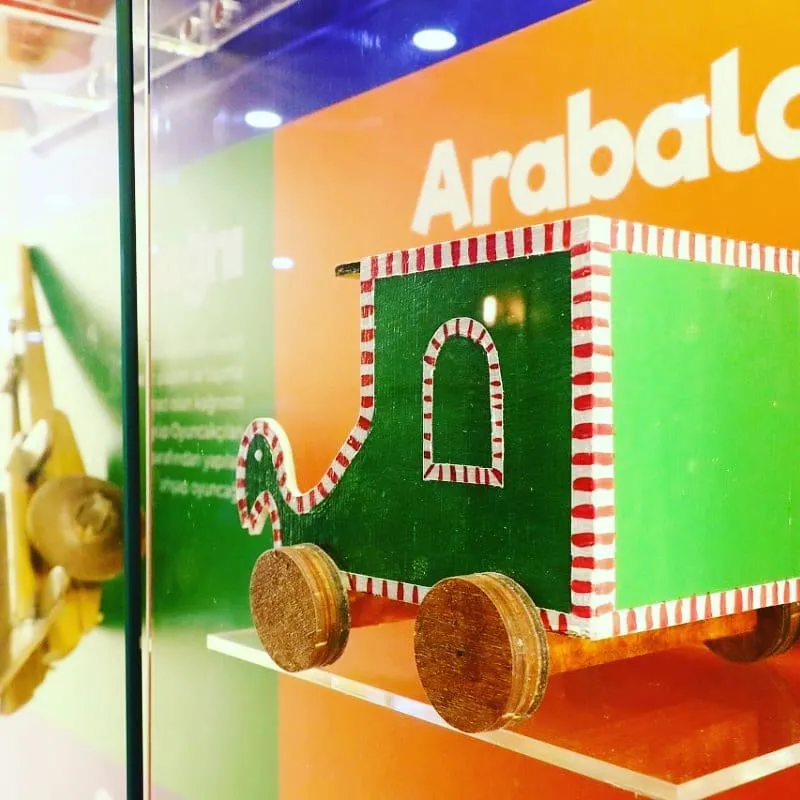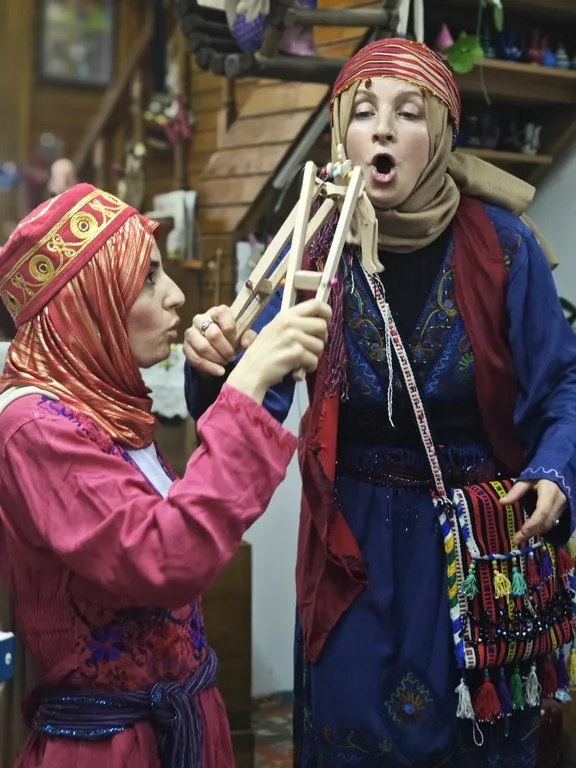
Yesterday 'a Cracked Noise', Today Cultural Heritage
An anonymous article in Resimli Tarih magazine dismissed Eyüp toys as 'a cracked noise'; today the same toys are recognised both for their pedagogical value and for their official place on Türkiye's SOKÜM national heritage inventory.
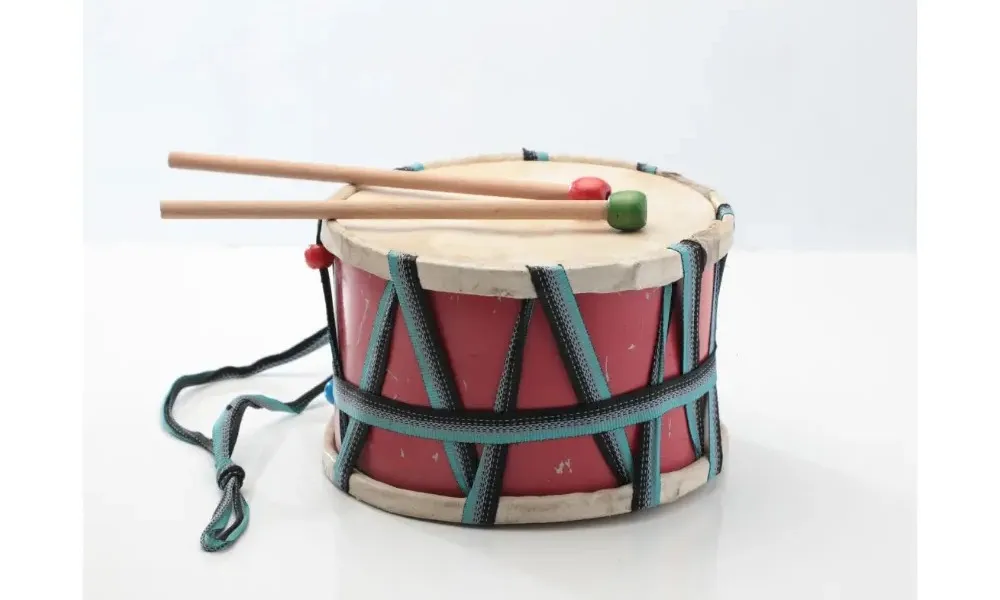
Eyüp toys were not always spoken of with today’s affection. In the mid-20th century, an anonymous article in Resimli Tarih magazine came close to mocking them outright; Reşad Ekrem Koçu’s entry “Eyyubsultan Oyuncakları” in the İstanbul Ansiklopedisi preserves that article word for word:
“As for entertainment, what entertainment was it — either a cracked noise or a broken, clattering racket. Crudely made from unfinished planks, painted in the worst, eye-hurting colours, these primitive products were far from giving a child any refined, thoughtful or aesthetic upbringing; instead they left the little one dazed by their noise, and dirtied his hands and palms besides.”
In Yalçınkaya’s account, a separate sentence follows right after these lines, aimed not at the toys themselves but at the peddlers who sold them: “Itinerant Eyüp toy-sellers were, without exception, would-be firemen and hooligan riff-raff.” The scorn jumps here from the product to the person; having called the toy ugly, the writer cannot resist insulting the man who sold it too. Tulumbacı and külhanbeyi were both dismissive labels for the era’s street types; the writer put the itinerant toy-seller in the same company as both.
Where the scorn came from
For the article’s author, Eyüp toys added no educational value at all, just cheap noise. The timing was no coincidence: those were the very years the Eyüp toy trade was losing ground, its shops closing one after another under competition from tin and factory-made toys.
There is also a diagnosis of the decline that comes from inside the trade, not from outside it. Writing in Milliyet Pazar in 2003, Ural Yalvaç locates the problem in the craftsmen themselves: “The fact is that Eyüp toy masters kept making the same toys without bringing anything new, and so over time all the toy workshops were forced to close. In other words, the toymakers failed to keep pace with the changing child.” Quoted by Yalçınkaya, this diagnosis sets an outsider’s mockery beside the masters’ own self-criticism.
What scholarship says
Academic literature looks at the same toys through a very different lens. According to Fadime Geleş’s research, wheeled pull-toys support a child’s walking skills and muscle development; musical toys build listening, rhythm and balance. Geleş names a third category besides these: “Miniature household items are toys serving this same purpose too; examples such as the cradle, mortar, churn, wire cabinet and chair can be considered within this frame.” Behind this classification lies the idea that a child comes to understand the adult world through objects scaled down to its own size. Tosun Yalçınkaya reaches the same conclusion in his 2006 conference paper: with their mechanical and static designs, these toys build a child’s capacity to imitate adults, develop fine and gross motor skills, and sharpen hand-eye coordination: “whatever anyone says, they were the educational toys of their time” (Yalçınkaya, p. 294-295).
Domestic goods, even in Beyoğlu
A scene that runs directly against the mockery plays out in the very place imported toys were most prized. In the early 20th century, one of Beyoğlu’s showy toy shops was Çocuk Bonmarşesi on İstiklal Caddesi; founded in 1930 and selling nothing but toys, its counters carried German-made infantrymen, sailors and mounted officers. The same counters made room for domestic production too. As Fadime Geleş records it, “Tin giant butterflies, tip-cat stick games, roly-poly toys, balls and Eyüp-made acrobat toys were among the domestic goods.” Even at the height of imports, Eyüp’s acrobat toy found a place in Çocuk Bonmarşesi’s own shop window.
Today: a national heritage record
Decades later, the perception has turned around completely. Eyüp toys are now formally registered on the Ministry of Culture and Tourism’s Intangible Cultural Heritage (SOKÜM) National Inventory of Türkiye, and the record sits inside the inventory’s full hierarchy. Under the domain “Traditional Children’s Games and Toys” (code 1008), within its element “Traditional Toys and Toy-Making” (1.008.01), it is listed as a sub-element: “Eyüp Oyuncakları Yapımcılığı,” code 1.008.01/34, sequence number 570, with an İstanbul provenance. A craft once dismissed as “a cracked noise” and “eye-hurting paint” is now a cultural heritage element under state protection, registered down to its sequence number.
What remains
That arc is most visible in our own workshop. In our toy-painting workshop, children still paint these same toys with the same brush and the same patience; no longer with eye-hurting paint, but with water-based paints meeting the EN71 safety standard. A child spinning a string top is keeping alive the present, registered form of a tradition once dismissed as “a broken, clattering racket.”
Sources
- Koçu, Reşad Ekrem (ed.), “Eyyubsultan Oyuncakları,” İstanbul Ansiklopedisi, Vol. 10 (ERI-FIR), 1972, p. 5461-5462.
- Yalçınkaya, Tosun (2006). “Eyüp Oyuncakçılığı ve Oyuncak Atölyesi,” Tarihi, Kültürü ve Sanatıyla X. Eyüpsultan Sempozyumu Tebliğleri, Eyüp Belediyesi, p. 290-295.
- Geleş, Fadime. “İstanbul Çocuk Oyuncakçıları,” Antik Çağ’dan XXI. Yüzyıla Büyük İstanbul Tarihi, Vol. 4, İSAM + İBB Kültür A.Ş., 2015. https://istanbultarihi.ist/138-istanbul-cocuk-oyuncakcilari
- Ural Yalvaç, “Eyüp Oyuncakları,” Milliyet Pazar, 24 August 2003 (quoted in Yalçınkaya, 2006, p. 293).
- SOKÜM National Inventory of Türkiye, Ministry of Culture and Tourism Directorate General of Living Heritage, “Eyüp Oyuncakları Yapımcılığı,” code 1.008.01/34.