
N° 02 · AssemblyThe toys' history is told to suit the age group; wooden parts are sanded, assembled, then painted and patterned.
What happens here
The history of the toys is told in a way that suits the age group — as a tale for the little ones, history-based for the older. Wooden parts are handed out and sanded smooth. The toy's assembly is demonstrated; pieces are joined with glue and various tools, with instructors helping where needed. The toys are coloured and patterned, then handed to their makers.
Children with special needs: our workshops are adapted in content and pace. Just mention it when booking.
Related reading from the Journal
All articles →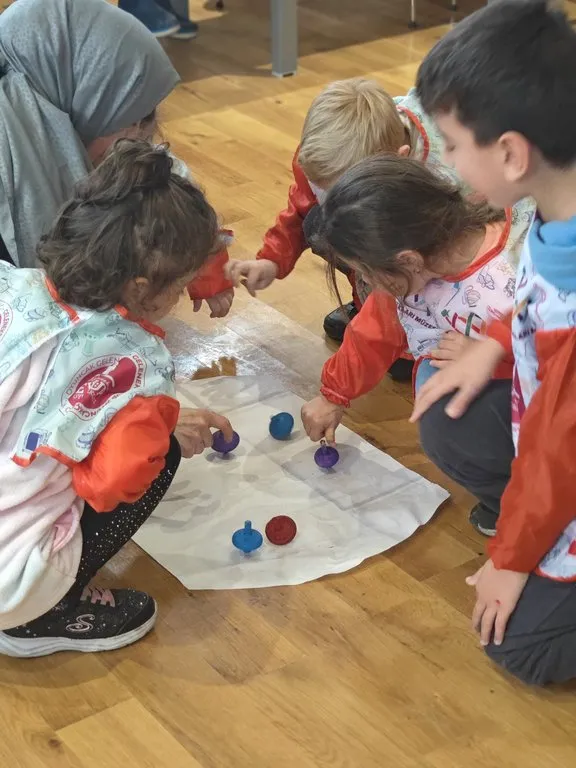
Which Woods Are Used in Toy-Making?
Why beech is the first wood of toy-making, where birch comes in, and why poplar belongs at the workbench rather than in the toy.
11 June 2018Read →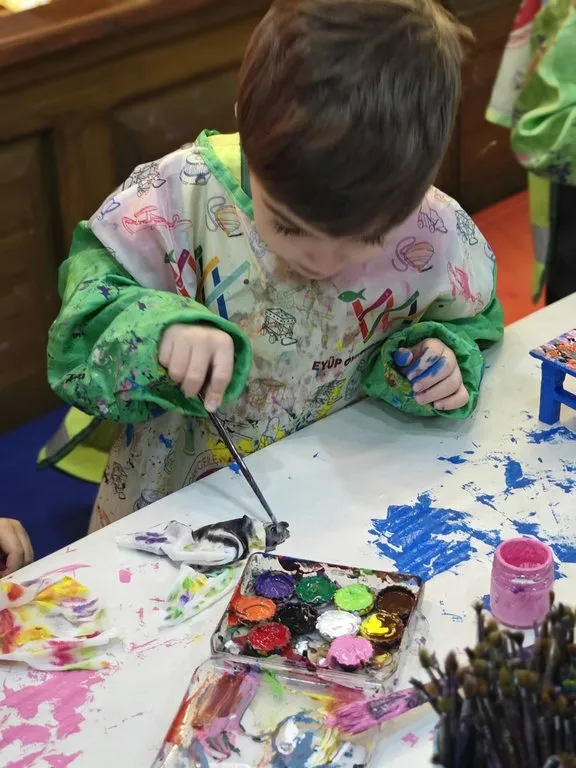
Fifty-Seven Women, One Tradition
Through a joint EU and İşkur project, fifty-seven women from Fener-Balat relearned Eyüp toy-making in 2005. The official story of the tradition's revival.
12 July 2026Read →