Toymakers' Lane: The Story of a Street
Toymakers' Lane, two facing rows of shops off İskele Avenue, holds the story of a fire, a square's redevelopment, and a childhood that changed.
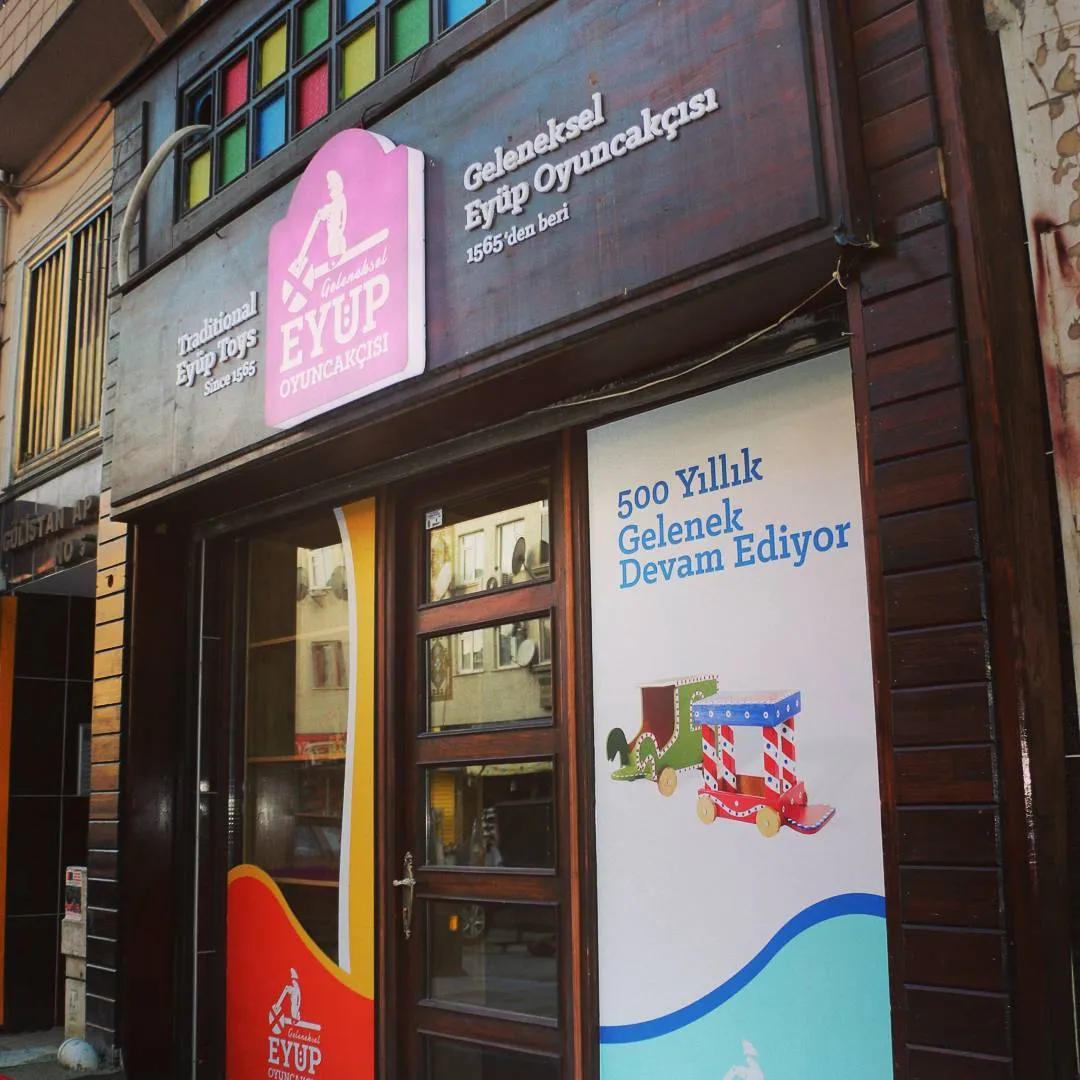
Along İskele Avenue, on the way to the tomb of Eyüp Sultan, ran a narrow street lined with two facing rows of shops: Toymakers’ Lane. The toymaking masters made and sold their wares here; in the early 19th century some 25 to 30 shops did business on this one street. Set against the 100 shops Evliya Çelebi counted in the 17th century, even that number points to a long decline already under way: the 1921 fire would bring a craft that had shrunk considerably to the brink of extinction.
Inside the shops
Along the street, wood was worked, leather stretched taut, and jugs shaped and fired from the Golden Horn’s red clay. Toys decorated with earth pigments (mostly red, blue, green and white) and gilded in yellow travelled from here to aktar shops and street vendors, reaching every corner of the city. Two facing rows of shops running the length of a dead-end lane: that image is exactly where Toymakers’ Lane took its name.
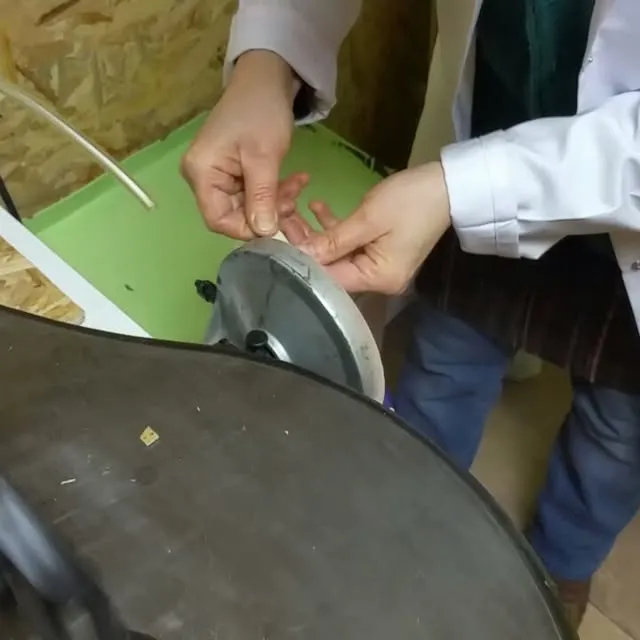
Yalçınkaya’s 2006 paper describes this production process a little more closely. Wood was worked with the carving and cutting tools the masters knew; soaked leather was stretched and bound over drums and tambourines made of clay or wood. Clay jugs were formed from the well-known red earth and fired in a kiln; metal toys were made by reshaping the tin cans of the day in a master’s hands. Pieces were joined with string, wire and nails — modern glues would only replace the nail much later (Yalçınkaya, 2006, p. 294).
Fire and shrinking
A fire that struck the Eyüp market in 1921 changed the street’s fate. Afterward, only 2 shops remained standing on Toymakers’ Lane — a market of dozens of shops fell to two workbenches overnight. One of the masters left, Kadir Şengöz, summed up where the tradition stood in 1939, in a bitter line:
“Eyüp toy-making has died now… we could no longer compete with Europe’s toy factories and their tin toys.”
The last shop, the last master
In 1955 Kadir Şengöz’s son, Halit Şengöz, took over the 77-year-old shop, but he too could not hold out against the plastic toys sweeping the era; “I surrendered to plastic,” he would say. Father and son were the last link in a mastery passed on mould by mould, hand to hand, but a craft made piece by piece could no longer compete with tin and plastic factories. A 1958 redevelopment of Eyüp Square removed the street’s last two historic shops. Toymakers’ Lane kept its name, but not its shops.
One observer of the period wrote that the masters closed because they “kept making the same toys without ever bringing anything new”: the story of failing to keep pace with a changing childhood, a changing city. It is a lesson we keep close in our own workshop today: a tradition only survives by renewing itself.
The shop closed, the knowledge did not
The street’s shops disappeared entirely in 1958 — the stone and the workbenches were gone — but the craft itself did not disappear with Halit Şengöz. From 1918 onward, Kadir Şengöz had worked from his own original moulds to bring production up to the standards of his day, and his son Halit had learned the craft at his father’s side, apprenticing under the same roof. Years later, when the project to revive Eyüp toy-making reached him in 2005, Halit Bey received it warmly and said he could pass on his knowledge and experience (Yalçınkaya, 2006, p. 294). Nearly fifty years after the last shop on Toymakers’ Lane closed, the knowledge the street had carried went on living, under another roof, in the workshop. We tell the full story of that handover in our post The Last Master: A Century of the Şengöz Family.
The street’s memory
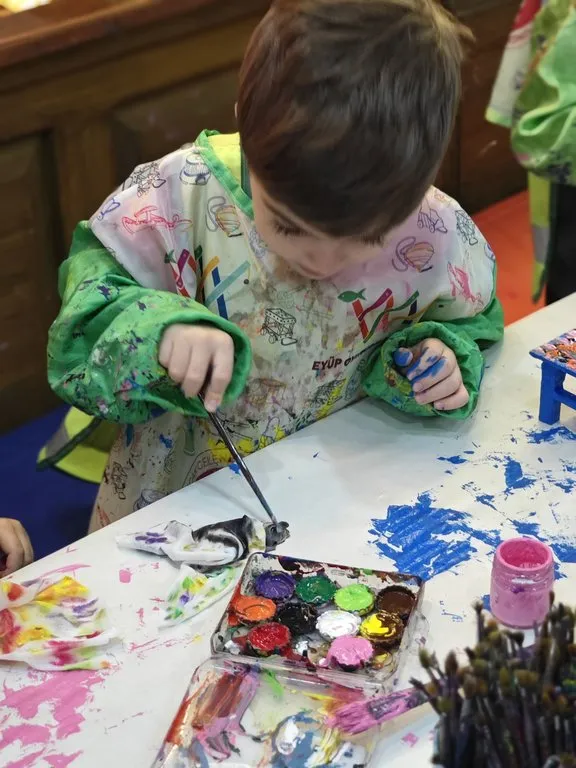
Toymakers’ Lane no longer exists as a physical place (the square’s redevelopment erased even its trace), but its story has not been lost. A hundred years ago wood, clay and leather passed over these workbenches; those benches are gone, but the same materials, worked with the same patience, are shaped again today on our workshop’s own benches. The 2005 revival project carried that same earth-pigment and yellow-gilt tradition forward in its own way: per Yalçınkaya’s paper (p. 294), it chose water-based paints, grey and yellow gilding, and soft, stylised wavy patterns for the toys it reproduced. The EN71-certified water-based paints we use in our workshop today continue that same choice. In our museum, the knowledge and toy types handed down from the street’s last masters live on; our post A History of Eyüp Toy-Making traces this lineage in full.
Sources
- Geleş, Fadime. “İstanbul Çocuk Oyuncakçıları,” Antik Çağ’dan XXI. Yüzyıla Büyük İstanbul Tarihi, C. 4, İSAM + İBB Kültür A.Ş., 2015. https://istanbultarihi.ist/138-istanbul-cocuk-oyuncakcilari
- Yalçın, Hülya. “Eyüp Oyuncakları Müzesi,” Tarihi, Kültürü ve Sanatıyla Eyüpsultan Sempozyumu VIII: Tebliğler, İstanbul, 2004, s. 69-70.
- Ural, Yalvaç. “Eyüp Oyuncakları,” Milliyet Pazar, 24 Ağustos 2003.
- Yalçınkaya, Tosun (2006). “Eyüp Oyuncakçılığı ve Oyuncak Atölyesi,” Tarihi, Kültürü ve Sanatıyla X. Eyüpsultan Sempozyumu Tebliğleri, Eyüp Belediyesi, s. 290-295.