What Does an Eyüp Toy Give a Child?
Eyüp's old toys were never just for fun; according to the academic literature, pull-carts, musical toys and miniature household items were shaped to support skills ranging from muscle development to imitation.
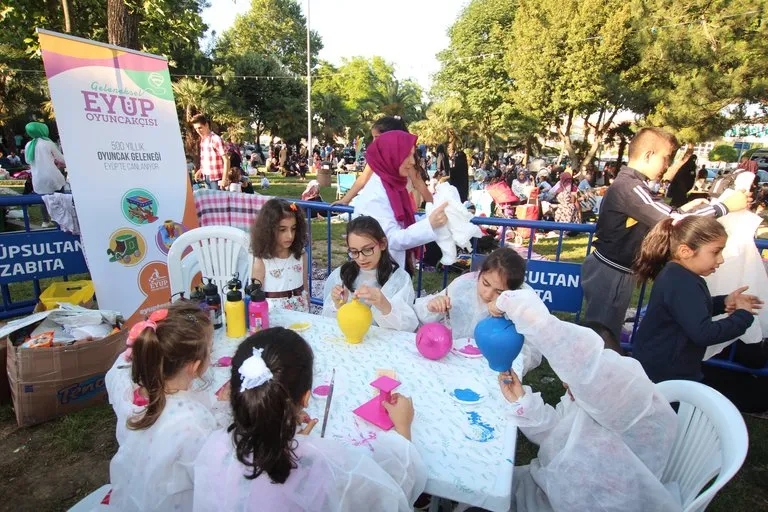
Looking at the historical record of Eyüp toy-making, these toys turn out to carry a design logic aimed at a child’s development, not just entertainment. Most of these pieces, made by hand from wood, leather and clay, were not built on a systematic theory of education for their time, yet their very use shaped a child toward specific skills. Fadime Geleş’s research splits these toys into four separate groups by function, while Tosun Yalçınkaya’s 2006 conference paper sets the same observation within the vocabulary of child development. Many of the pieces we make in our workshop today carry forward the same principles that emerged centuries ago.
Walking, pulling, pushing
According to Fadime Geleş’s research, these toys are not one undifferentiated mass but part of a classification split by function; the first group is made up of “pushed-and-pulled toys.” Alongside wooden-wheeled carts pulled along on a string in front, single-wheeled handcarts serving the same purpose but worked with two push-arms in front also belong to this group. A toy pulled by its string encourages a child to take steps, keep balance, and coordinate arm and leg together; a handcart pushed by two arms asks for that same balance, but built this time by the child’s own arm strength. Small wheels and a light wooden body make the movement repeatable without an adult’s help. The same logic lives on today in our pull-cart with birds.
One wheel turning another
Geleş’s second group is made up of moving toys given mechanical properties through nail, wire and tin connections. Here, what starts the motion is not the child’s hand but the toy’s own inner mechanism: “…one wheel or part setting another part into motion, into turning, holds the child’s interest by producing sound as it does.” What holds the child’s attention is not the toy’s decoration, but this moment of one part setting another in motion; the child notices that a movement has triggered an unseen mechanism, and that the result comes back as sound. One of the examples Geleş lists in this group is the kaynana zırıltısı, the “mother-in-law’s rattle”: a concrete instance of the same mechanical logic, producing sound as a turning wheel strikes a wooden tongue. In the first group, the motion is produced by the child’s own muscle; in this second group, it is produced by the toy’s own mechanism, and what falls to the child is to start that motion and watch what follows.
A listening, rhythm-keeping ear
Geleş’s third group is musical toys. The same research notes that musical toys such as tambourines and drums built a child’s listening, sense of rhythm and balance. A tambourine or drum in a child’s hands was never just noise; it was a practice ground for noticing the repetition of sound, adjusting the force of a strike, and learning to stop: in a sense, the first instrument for coordinating body and sound. The same practice continues today in our drum and our tambourine with cymbals.
A small house, a big world
Geleş’s fourth group is miniature household items. The researcher sums up this group’s logic in a single line: “From birth to adulthood, a child tries to perceive, construct and come to understand objects, sounds and movements belonging to the world of adults, but scaled to fit the child’s own physical size.” Scaled-down everyday objects like cradles, mortars, butter churns, wire carts and chairs served exactly this need. A child rocking a cradle or turning a churn was, in effect, repeating with small hands the household work and everyday movements of the adults around them, looking at that world from a rehearsal space of their own.
In the hand, the eye, the muscles
Tosun Yalçınkaya, in his 2006 conference paper, sets this observation within a more systematic framework: Eyüp toys, through their mechanical and static designs, build a child’s capacity to imitate adults; pushed-and-pulled toys contribute to fine and gross motor development; they support hand-eye control and coordination; and the same mechanical construction’s steady sound builds a sense of rhythm. According to Yalçınkaya, these qualities are not incidental: they follow directly from the toys’ mechanical construction. He sums up this assessment in a single line: whatever anyone says, these toys were “the educational toys of their time” (Yalçınkaya, p. 294-295).
A logic carried into today
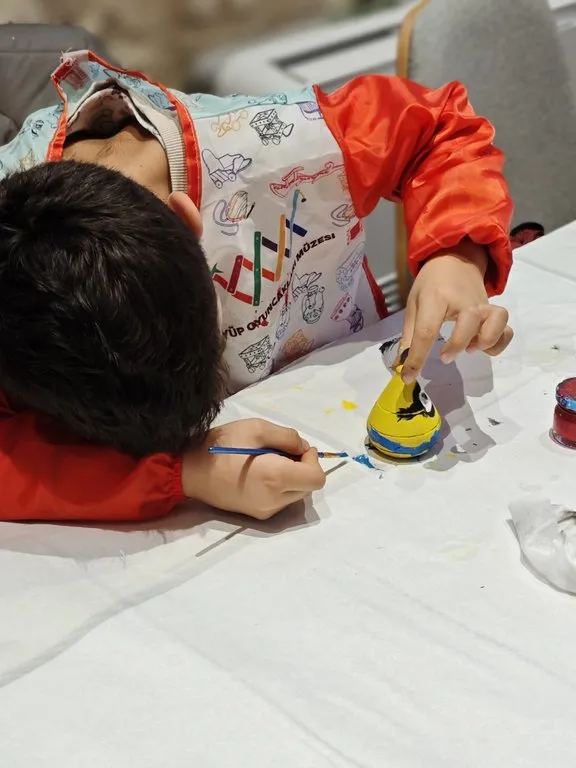
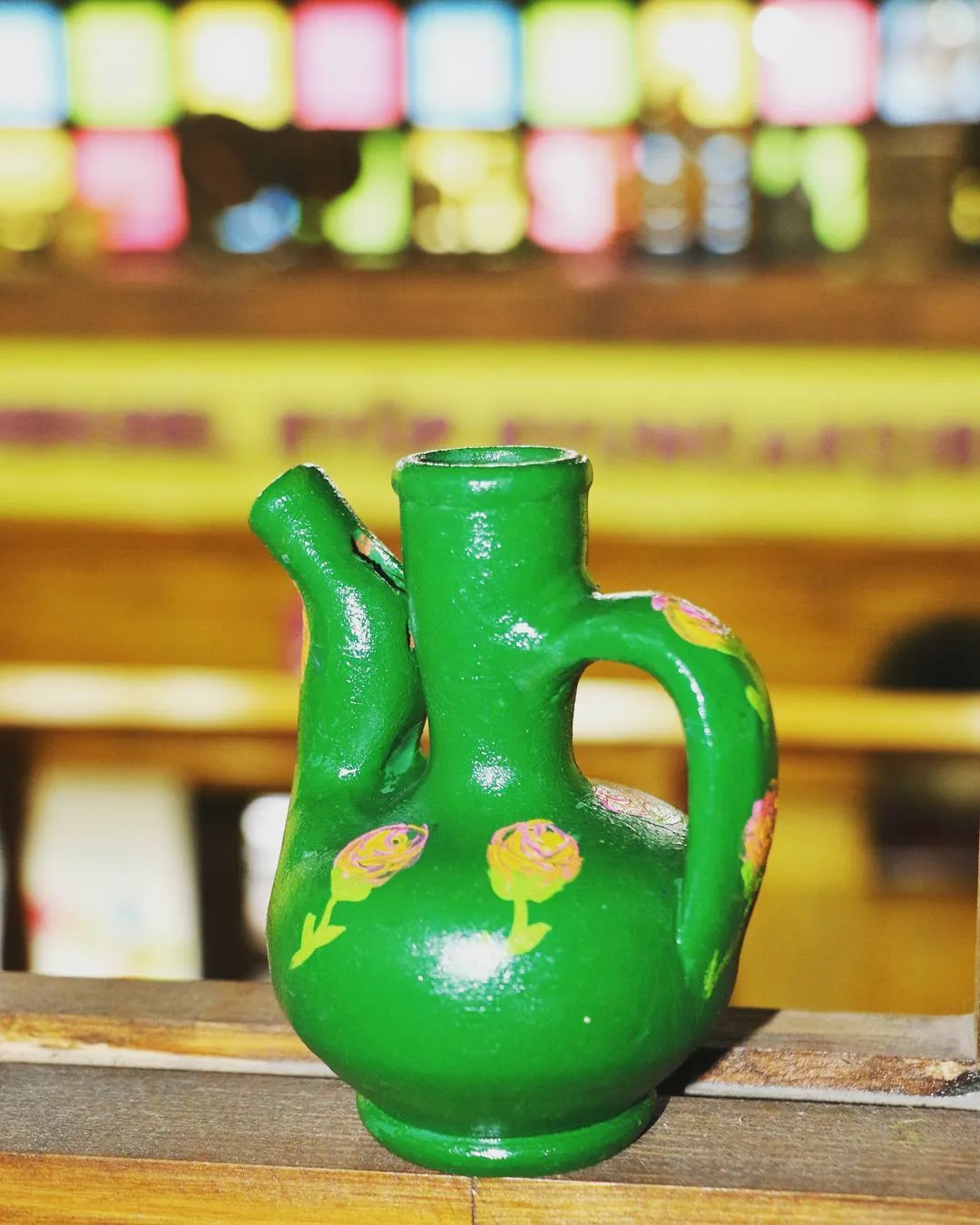
The same logic still holds in our Child & Psychology Workshop: the place of handwork, repetition and imitation in a child’s development ties a century-old wooden toy to today’s workshop table. A child pulling a pull-cart with birds, spinning a kaynana zırıltısı, or turning a toy churn is, without knowing it, repeating the same simple principles that were already at work a century ago. Every new toy shaped in a child’s hands is, in effect, a continuation of this old design logic reaching into the present.
Sources
- Geleş, Fadime. “İstanbul Çocuk Oyuncakçıları,” Antik Çağ’dan XXI. Yüzyıla Büyük İstanbul Tarihi, Vol. 4, İSAM + İBB Kültür A.Ş., 2015. https://istanbultarihi.ist/138-istanbul-cocuk-oyuncakcilari
- Yalçınkaya, Tosun (2006). “Eyüp Oyuncakçılığı ve Oyuncak Atölyesi,” Tarihi, Kültürü ve Sanatıyla X. Eyüpsultan Sempozyumu Tebliğleri, Eyüp Belediyesi, p. 290-295.