The Imperial Caïque and Its Toy
How did the imperial caïques — the grandest vessels of the Ottoman sultans — become a toy in the hands of Eyüp's toymakers?
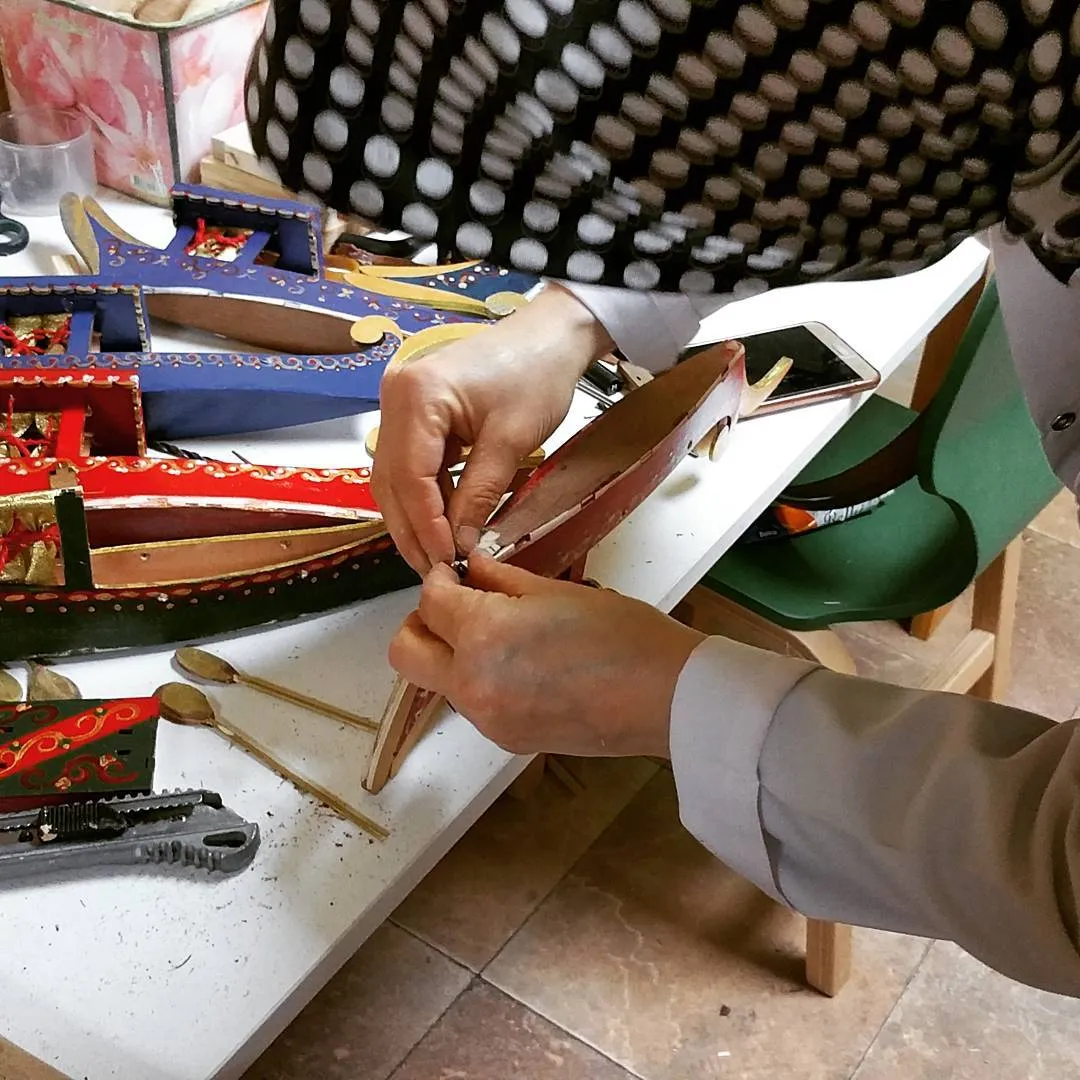
After the conquest of Istanbul, the pleasure boats that carried the Ottoman rulers across the Sea of Marmara — the most prestigious vessels of the sultans of their age — came to be called imperial caïques (saltanat kayığı).
In these caïques, the finest and most refined examples of Ottoman boat-building, beauty and splendour were expressed in the plainest style and with striking balance. Known among the people by names such as Köşklü (pavilioned) and Kuşlu (birded), they were built in various sizes and styles. On some, an eagle figure at the bow symbolised power, splendour and goodness, while the snake caught in the eagle’s talons stood for evil.
Kemanebaş, kancabaş, dikbaş
Imperial caïques were built in different forms: Kemanebaş, Kancabaş and Dikbaş. The sultans’ own caïques were mostly of the Kemanebaş form, while those used by the Harem were built mostly as kancabaş and dikbaş. At the stern sat a pavilion for the sultan; the bow and stern were adorned with gilded carvings.
Becoming an Eyüp toy
Many a sultan came to Eyüp Sultan by these caïques for the accession ceremony and the Girding of the Sword. Because the sultans arrived at Eyüp by water, the imperial caïques became a subject for Eyüp’s toymakers, who produced toy forms of them in their own day.
Today the Traditional Eyüp Toymaker continues to produce the Imperial Caïque in different sizes, colours and patterns, for children, enthusiasts and collectors alike. Some of the original caïques can be visited at the Naval Museum in Beşiktaş, Istanbul.
A trace in the records
This boat-shaped toy has a documented past of its own. In the 17th-century list of toy types recorded by Yalçınkaya (2006, s.292), boats painted in red and green appear alongside “royal barges” (padişah kayıkları). This does not mean today’s Imperial Caïque is literally the same toy noted in that record; but the detail, sitting there in that list, suggests that a boat-shaped toy has been part of Eyüp toy-making for centuries, one link in a much longer line.
One of the first sixteen, in 2005
Among the sixteen toy types produced in the first phase of the 2005 revival project was the Imperial Caïque (Yalçınkaya 2006, s.294). The toy still made in the workshop today was part of that first wave, when the tradition was brought back to life; not a later addition to the catalogue, but a name on the list from the very start. We told the wider story of that project in our post Fifty-Seven Women, One Tradition.
Sources
- Yalçınkaya, Tosun (2006). “Eyüp Oyuncakçılığı ve Oyuncak Atölyesi,” Tarihi, Kültürü ve Sanatıyla X. Eyüpsultan Sempozyumu Tebliğleri, Eyüp Belediyesi, s. 290-295.